Beyond the Showroom: Designing Presentation Centres with Purpose
In today’s market, the role of a multi-residential presentation centre is evolving fast. It’s no longer just about showcasing floorplans, but also about creating a flexible, multifunctional space that supports a variety of sales strategies from elaborate launch events to intimate buyer appointments, serving as the place where first impressions are made and brand storytelling comes to life. This shift demands a new kind of design thinking: spaces that are versatile, memorable, and deeply aligned with both the end-user experience and backend operations. When designed with care, a presentation centre does more than inform, it creates connection. The layout, lighting, and material choices all work together to shape how someone feels in the space, and in turn, how they begin to imagine their future there. At CHIL, our role is to translate the project’s intent into an environment that resonates. One that not only supports the developer’s goals, but also reflects the values, lifestyle, and aspirations of the people it’s built for. 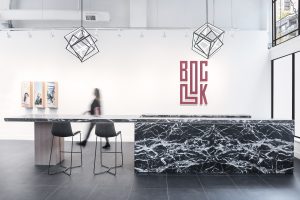
At The Block, the presentation centre captures the energy of downtown and the soul of a storied past.
Our approach to The Block Presentation Centre was no different. Located in the heart of downtown Vancouver, The Block needed to resonate with a demographic that lives and breathes the city—from young tech professionals seeking edge and energy to mature, design-conscious couples with a love of travel and culture. The building itself, designed by GBL Architects, is rooted in history, with the restored four-storey brick façade of the former Northern Electric Building anchoring the project. While the exposed brick lives in the tower, that sense of historic romance carries through into the presentation centre. We wove in subtle references to the past while capturing the energy, texture, and rhythm of downtown life. To bring that vision to life, we began, as always, with strategy.
- It Starts With Strategy
Every presentation centre begins with alignment. Before pen hits paper, we take time to understand what makes the project unique, what its vision is, its audience, and its goals. Is this a luxury tower aimed at downsizers? A wellness-focused community for families? A sleek urban offering for first-time buyers? Design is never one-size-fits-all, and the presentation centre shouldn’t be either.
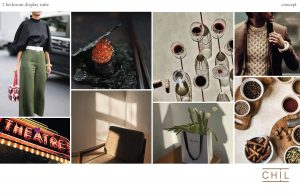
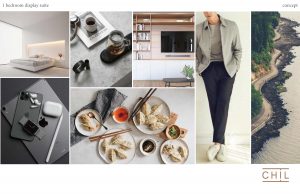
Concept development for the two distinct buyer profiles that our design for the two display suites was based on.
For The Block, the marketing partner MLA provided clear direction early on: Room to Start, Room to Grow. This became a guiding principle as we explored the buyer profiles: one, a young, design-savvy tech professional drawn to clean lines, minimalism, and subtle masculine tones; the other, a cultured downsizing couple with a love of travel, art, and entertaining, whose style leaned toward the eclectic and layered. We asked ourselves: Where would they shop? What would they drink? Where would they travel on the weekend? Their lifestyle became our creative brief. From there, we translated those narratives into two distinct display suites, each designed to reflect a different lived experience. The one-bedroom suite is light, youthful, and playful, an elevated urban starter home. The two-bedroom suite embraces depth and richness, a reflection of eclectic personality and years of zest for life.
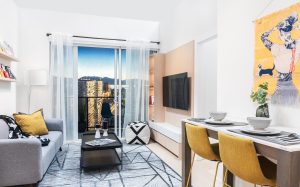
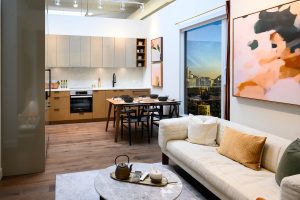
“Room to Start, Room to Grow” inspired two suites reflecting distinct buyers: a minimalist tech professional and an eclectic, well-traveled couple.
We collaborated closely with the marketing and branding teams to ensure the design narrative was aligned across every touchpoint. The branding for The Block was developed early on by Letterbox, whose logo design (letterforms pieced together to form a block) beautifully echoed the modular, layered nature of the project. As we began designing the presentation centre, what emerged was a rare, symphonic creative exchange. Our concepts inspired the branding, while their visual identity in turn shaped spatial moments within the presentation centre. It was a partnership where one idea sparked another, leading to something that became more than the sum of its parts.
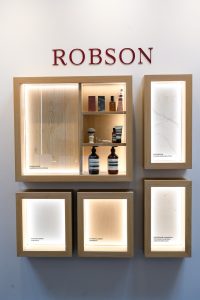
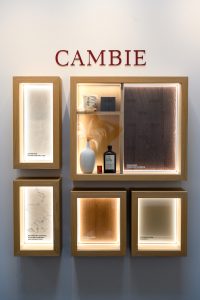
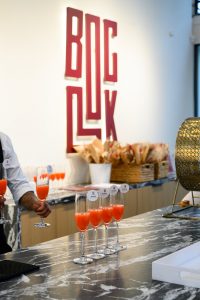
Our spatial concepts influenced the logo, and that logo, in turn, shaped key moments in the interiors.
- Creating the Journey
Circulation is everything. A well-designed presentation centre guides visitors seamlessly from start to finish. It creates a rhythm that builds curiosity, inspiration, and trust. At The Block, we optimized the layout to reflect that emotional arc. Visitors enter through full-height glazing that frames the illuminated building model that is visible even from the street. That visibility invites intrigue and creates a sense of openness, anchoring the project proudly within its downtown setting. Inside, we kept the experience streamlined and intentional. The reception desk doubles as a planning table with an elongated, cantilevered form that allows for natural sit/stand conversation. A tall desk matching the high ceilings gives the space a sense of airiness and authority without feeling imposing. The stone on the desk, funnily enough, was a happy accident as the wrong material was delivered, but its unexpected presence added drama and material richness that ultimately elevated the space.
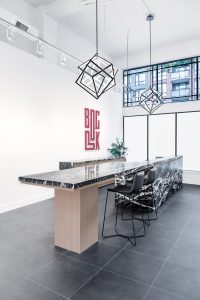
The reception desk doubles as a planning table with an elongated, cantilevered form that allows for natural sit/stand conversation.
To reach the display suites, visitors are led down a softly lit corridor, anchored by a long communal table and sculptural pendant lights that draw them forward. On either side, curated mood imagery, elegant objects, a beautifully framed map of the neighborhood, and an artful display of color palettes evoke the everyday rituals and quiet romance of downtown life. It’s a quiet, immersive moment that bridges brand storytelling with real-life aspiration. 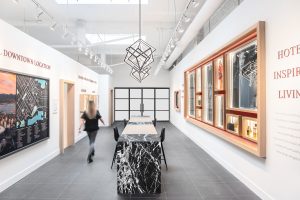
Curated displays along the corridor create a sensory journey, leading visitors through the story and spirit of downtown living.
- Telling the Story Through Detail
The look and feel of a presentation centre should echo the tone of the development itself. Materials, colors, lighting, and furniture are served as storytelling devices, each offering a chance to express the brand’s values and lifestyle promise. For The Block, that translated into a design language that felt refined, urban, and deeply connected to the energy of downtown living. The sales area features a palette that leans masculine and industrial, drawing inspiration from the heritage of the Northern Electric Building and its city-core context. Oversized black window frames act as interior walls, defining the closing offices with a sense of structure and rhythm. Clean lines, dark tones, and richly textured finishes were selected for their visual weight and long-term durability, grounding the space with a quiet confidence that nods to history while feeling unmistakably modern. 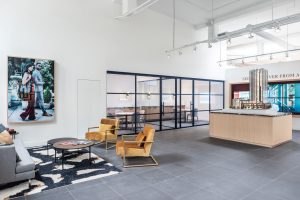
Industrial influences juxtaposed with elevated and elegant details capture the spirit of downtown Vancouver living.
The furniture, fixtures, and equipment package came in the second phase, after the kitchens and bathrooms were already designed. We used the floorplans and the buyer profiles to guide what furniture went where. The one-bedroom suite was styled with a Scandinavian-inspired approach: light oak finishes, crisp millwork, and smart storage solutions that demonstrate flexibility for a growing lifestyle. This scheme was tailored to the younger, minimalist buyer who values simplicity with purpose. The two-bedroom suite took on a more layered and expressive tone. Richer finishes, deeper color palettes, and accessories like velvet accents and sculptural décor aligned with the well-traveled, design-literate couple. Here, the millwork was both functional and decorative, enriching the space with moments of sophistication and character, including a walk-in closet vignette that speaks directly to how this demographic lives and entertains. Cost, scale, and attainability were all part of the equation but never at the expense of experience. The result is two distinct spaces that feel worlds apart yet unified by a common thread: thoughtful design rooted in real-life living.
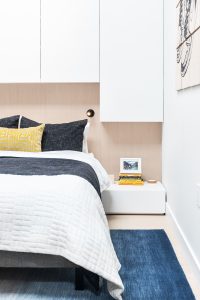
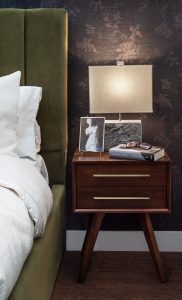
Accessories add layers and personality, expressing the individuality of each buyer profile even in similar spaces like the bedside.
- Real Life, Real Impact
When we design both the presentation centre and the residential tower, consistency is essential. A unified design language across both spaces builds trust with buyers and reinforces the development’s identity from the very first touchpoint. Our aim is to create a cohesive, lived experience that begins in the sales centre and continues all the way to move-in day. With The Block, that consistency came naturally. Because we were designing the presentation centre and the residential interiors in tandem, the dialogue between the two was seamless. Material palettes, spatial gestures, and tone were able to evolve together. What began as display concepts in the presentation centre later informed lobby moments, amenity finishes, and public area cues in the tower itself. Rather than creating something temporary and standalone, the presentation centre became an extension of the development’s story that grows richer and more dimensional with every phase. 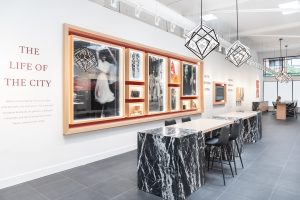
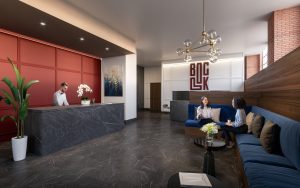
Designing the presentation centre and tower together ensures a seamless, consistent experience, simultaneously building trust and extending the development’s story from first impression to move-in day.
This integrated approach gave the entire project a stronger narrative and clearer direction. It allowed buyers to feel the identity of The Block not just in renderings or moodboards, but in real space. And when that story is felt consistently across every touchpoint, that’s how it builds connection, credibility, and long-term impact. Presentation centres are the prologue to the full story. With The Block, our integrated approach allowed us to shape a design narrative that’s both visually cohesive and emotionally resonant. By aligning strategy with story, materiality with meaning, and spatial flow with lifestyle, we created a space that brings the development to life.